Are you planning on trekking to the base of the world's tallest mountain? Here is a great starting point.
Whether you want to know when is the best time to go, how fit you need to be or look for a clear overview of trip inclusions, find answers to our most frequently asked questions from our adventurous staff, guides and mountain experts right here. So, sit back, dive in and start planning the trek of your lifetime.
Jump to a section:
How difficult is the trek? How many hours a day do you walk?
Is it very steep?
What altitude do you actually reach?
Do you need good shoes for the EBC Trek?
Do you have any training programs for the trek?
Do many people have issues acclimatizing?
Is the EBC trek dangerous? What are my chances of reaching Base Camp?
What happens in case of an emergency?
What is the accommodation like?
How does this compare to a standard teahouse trek?
What is the food like on the trek?
When is the best time to trek to Everest Base Camp?
Do I get to stay overnight at Everest Base Camp?
Where can I have a shower?
Where can I charge my phone on the way to Base Camp?
Where is Wi-Fi available on the EBC Trek?
What is the average size of the group?
Is there a minimum age, or is this trek suitable for everyone?
How big is the staff crew?
15kg isn't much. How do I pack lightly?
Can I take my own down jacket or sleeping bag?
Can I leave my excess gear in Kathmandu?
Is it culturally appropriate to wear shorts or leggings?
What else can I do in Kathmandu? Can I do any other short walks?
Why do I need to tip? Can't it be included in the trip price? What is the process for tipping?
What visa and trekking permits do I need?
Do I need travel insurance, and what should it cover?
Where can I exchange my money?
With so many trekking companies around, how do I choose the right one for me?
How difficult is the trek? How many hours a day do you walk?
The Everest Base Camp (EBC) trek is very achievable for people prepared to put in the work before departure. The trek is precisely that: a walk. There are no technical elements to the journey, just one foot in front of the other; the key is not to rush and to take your time.
Staff tip: “If you are positive and know you are going to trek for 14 odd days, then you can push your body. Often trekking difficulty is 70% mentality.”
Our Everest Base Camp in Comfort trek is graded moderate, meaning that you generally won't exceed eight hours of activity in a day. Some days can vary from 4-5 hours a day to just 2-3 hours; however, there will be sections where you are challenged. If you do the training, you go into the trek positive; that's more than half the battle.
Is it very steep?
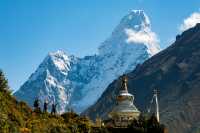
For our Everest Base Camp in Comfort trek, travellers should be comfortable with occasional rough terrain but expect long steep climbs. So, some days could include ascents and descents of 500 metres or more. Remember: speed isn't important; stamina, confidence and continuity are.
What altitude do you actually reach?
Everest Base Camp itself sits at 5,364m / 17,598ft, and the trek's true high point is the optional (and highly recommended) side trip up Kala Pattar at 5,545m / 18,192ft — the best vantage point for a close-up view of Everest, since Base Camp itself doesn't actually offer a clear view of the summit. Along the way you'll also pass through Namche Bazaar (3,440m / 11,286ft), the Sherpa trading hub of the Khumbu, and Tengboche (3,860m / 12,664ft), home to the region's most important monastery.
Do you need good shoes?
Yes! And don't forget quality socks. Happy feet equal a happy trekker, so seek out an outdoor and gear store that will help you get well-fitted, suitable, durable and comfortable shoes that'll last in the long run.
The Australian gear experts at Paddy Pallin shared their recommendations on choosing the right hiking boots in this blog post.
Do you have any training programs for the trek?
The training you should do to prepare for your EBC trek depends on your current level of fitness and any medical conditions. We don't specify detailed training programs as it is difficult to recommend a general program that applies to everyone. We suggest that you exercise a minimum of five times per week, an hour each time, doing activities such as hill walking, cycling, running and strength work.
Do many people have issues acclimatising?
Altitude sickness can vary for each individual; however, we've found that including carefully timed acclimatisation days scheduled into the trek has helped trekkers acclimatise.
Nevertheless, during the acclimatisation process, you may experience some of the following symptoms:
• Headache
• Tiredness
• Disturbed sleep
• Loss of appetite/nausea
• Shortness of breath
• Cough
• Palpitation
• Swelling of the hands and face
All our group leaders have extensive first aid training, and we urge you to communicate with the group leader at all times should you believe you have any symptoms to monitor you effectively.
Some tips to consider include taking your time, trekking at a slow and steady pace, and staying hydrated are essential in reducing the effects of altitude sickness. Our trek leaders continually monitor travellers and ensure everyone is drinking plenty of fluids – continually replenishing drink bottles with clean drinking water, providing morning and afternoon tea, and offering juice for some electrolyte kick.
Read more about the importance of hydration at altitude from Dr. Ross Anderson, the medical advisor for World Expeditions.
Staff tip: “Hike high, sleep low. This saying is one our leaders and guides follow when trekking at high altitudes. Our treks are structured so that you ascend slowly, allowing acclimatisation to occur.”
Is the trek dangerous, and what are my chances of reaching Base Camp?
Serious risk on the Everest Base Camp trek is low, and it isn't a technical or extreme trek — the main danger is altitude, not the terrain. There's no single official record of trekking deaths in the region, but industry estimates put the number at a small handful of people each year out of the tens of thousands who trek to Base Camp, and almost every documented case links back to ascending too fast or ignoring worsening symptoms, rather than bad luck.
Your chances of actually reaching Base Camp come down to pacing more than fitness. Guides and operators widely report meaningfully higher success rates for trekkers on itineraries with two or more dedicated acclimatisation days, compared with rushed schedules that skip them — which is exactly why our itinerary builds these rest days in, rather than racing to the finish.
What happens in case of an emergency?
There are limited medical facilities on the route, but our guides carry a full medical kit and are trained extensively on how to use it. We also carry portable altitude chambers, which are helpful if someone is suffering from AMS (Acute Mountain Sickness) but cannot be evacuated due to bad weather.
Emergencies are dealt with by the guide, who must pass a medical course each year. This course is run by our UK-based doctor who travels annually to Kathmandu to run the training course.
The safety of our travellers and crew is our number one priority. If a fellow trekker in your group needs to descend, an assistant guide will go with them. We have lots of support staff on the trek, so the person descending would be well looked after and won't impact the rest of the group's experience. In a severe case, evacuation would be by helicopter.
What is the accommodation like?
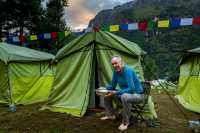
You'll want to make sure you have a good night's sleep when on a trek, and our eco campsites provide the comfort, warmth and privacy for a tranquil camping experience paired with superb mountain views.
Inside our standing height tents are off-the-ground beds with clean mattresses and pillows. At the campsites, you'll have composting or flushing western-style sit-down toilets, hand basins, and a windowed dining room with eco-friendly heating.
The nights in our private campsites will be complemented by nights in our hand-picked eco lodges that align with our responsible tourism practices. These lodges use a mix of cow/yak dung/solar and generators for power.
How does this compare to a standard teahouse trek?
Most Everest Base Camp treks use teahouses along the trail — small, family-run guesthouses with shared, often unheated rooms and communal bathrooms. It's a great way to experience the region, but comfort and warmth vary a lot from teahouse to teahouse, especially above 4,000m. Our private Eco-Comfort Camps offer an alternative: the same trail, the same views and the same distances, just a warmer, more private place to sleep and eat at the end of each day.
What is the food like on the trek?
You'll have a full-time personal cook and assistant on-hand to prepare a creative menu under strict hygiene standards using almost all fresh ingredients. There's always plenty to go around, and you can help yourself to seconds or even thirds!
Every day is different, but here is a sample of one day's menu on the trail.
Breakfast: Tea served in your tent, coffee or hot chocolate, porridge or a grain cereal, toast with spreads, eggs (fried, omelette or boiled) and tomatoes, boiled water.
Lunch: Juice, potatoes, cucumber and carrot salad, cheese and gherkins, chapatis, pizza, canned tuna and meats, fresh oranges and bananas, boiled water.
Dinner: Soup, steamed vegetables, rice, fried chicken, daal, spaghetti, chocolate cake, fresh apples, tea or hot chocolate, boiled water.
Unlike most companies, World Expeditions includes a full meal service as part of the trip price that lowers the risks to you and safeguards your health.
When is the best time to trek to Everest Base Camp?
The trekking season for Everest Base Camp runs from mid-September to May. October is traditionally the most popular time for this trek when the views are great and temperatures are not too extreme. But we also get many travellers enjoying the colder winter season (Dec/Jan) when numbers on the trail are lower, and skies are clearer for that Instagram-worthy photo.
We always get a lot of interest in our treks over Christmas and New Year's, as it is an exciting way to spend the holiday season and minimises the days you need to use from your holiday allowance. If you trek during the winter season, you need to be prepared with suitable clothing for potentially low temperatures. Still, we provide good quality down jackets, down sleeping bags and fleece sleeping bag liners to keep you cosy.
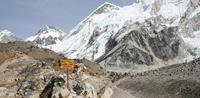
As you head towards March and April, the temperatures get warmer and you'll be in the thick of the activity at base camp as the big expeditions get ready to summit. While some days can be a little hazier (in the lead up to the monsoon period) with cloud build up often in the afternoon, usually, the peaks are clear in the morning.
Every month of the trekking season has something to offer in Nepal, so it can be difficult to choose when to go. You can read our in-depth post on the pros and cons of trekking for each season.
Do I get to stay overnight at Everest Base Camp?
Our Everest Base Camp trek does not stay overnight at base camp. Instead, you stay at Gorak Shep, where you walk into base camp for a day trip. To sleep at base camp requires special permits, which are very expensive.
Where can I have a shower?
Some campsites and eco lodges have hot showers at some facilities in the Everest region, which are powered by hydro or solar panels. These locations are: Ghat, Namche, Deboche, Dingboche, Lobuche, Dole, Machhermo and Gokyo. A small cost of between 300‑650 Nepali rupees is payable to utilise this service, subject to availability.
Most, but not all, World Expeditions trips in the Everest region visit one of more of these locations. Refer to your itinerary to see which campsites you'll be visiting on your trek.
Where can I charge my phone on the way?
Some accommodations have charging stations available for small electronic devices such as phones, cameras and battery packs, but will often come at an additional cost should you wish to use the power. This can range from 200-600 rupees, depending on how far you are from the power grid.
The following locations have electricity available:
• Ghat
• Monjo (Not at our campsite, but you can charge in nearby tea house)
• Namche
• Deboche
• Dingboche (Not at our campsite, but you can charge in nearby tea house)
• Lobuche (Solar charging facility)
• Gorak Shep (Solar charging facility)
• Lukla
We recommend you consider purchasing portable power banks or solar chargers for phone charging.
Where is Wi-Fi available?
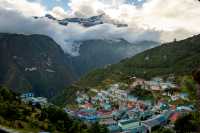
You can get Wi-Fi access at Namche, Dingboche, Lobuche, Gorak Shep and Lukla. Again, some locations may charge a small cost for its use.
What is the average size of the group?
Groups can vary between 6 to 16 travellers, who are typically are a mix of individuals, couples or friends travelling together who have a shared interest in outdoor adventure and nature. Ages differ from people in their 20's up to their 70's from all nationalities. The Everest Base Camp in Comfort trek is a highly popular trip with all dates guaranteed to depart.
Is there a minimum age, or is this trek suitable for everyone?
The minimum age for our Everest Base Camp Trek in Comfort is 14, reflecting the sustained daily walking hours and altitude involved. The trek isn't suitable for travellers with limited mobility, as the trail is uneven underfoot for almost its entire length with no vehicle access once you begin walking. Beyond that, it's genuinely open to a wide range of fitness levels and ages, provided you put in the training beforehand.
How big is the staff crew?
You will typically have a main guide, plus four assistant guides, a sirdar (who manages the porters), porters, cooks and camp hands that join you on your Everest Base Camp trek.
15kg isn't much, how do I pack lightly?
While we've increased the check-in allowance for our travellers from 10kg to 15kg on internal flights to Lukla, choosing between carrying an extra pair of trekking pants or a solar charger can get tricky.
Choose lightweight and quick drying clothing, stick with one good outer layer and warm jacket and balance that with enough base and inner layers. You'll be surprised to find how many days you can wear a quality base layer or a pair of hiking socks.
Staff tip: “I encourage people to ditch the many toiletries and products. Take one biodegradable soap that can be shampoo, body wash, hand wash, and laundry wash all-in-one. I used a biodegradable shampoo for this (an organic brand that was affordable from the supermarket) and it worked great. I have dry sensitive skin and I use it at home as well. Also, there's no need for makeup or hairspray, go natural, it's so liberating!”
While you get 20kg all up (15kg check-in and 5kg hand carry), keep in mind that your provided kit bags – which include a down jacket, sleeping bag, liner, and the bag itself – comes in at around 5-6kg and should be counted in the above allowance.
Staff tip: “Lay out your items, cull it back, then cull it back again – just because it fits, doesn't mean you should take it.”
Can I take my own down jacket or sleeping bag?
Yes. When collecting your World Expeditions kit bag, let your trek leader know that you have your own down jacket or sleeping bag and they will remove the provided gear from your kit bag.
Can I leave my excess gear in Kathmandu?
Yes. You can leave your other gear and luggage bag at our World Expeditions desk at the Radisson Hotel, which will be safely stowed away.
Is it culturally appropriate to wear shorts or leggings?
Dress modestly. For those who wish to wear shorts, make sure the shorts cover your knees. For those that are comfortable in leggings, have a long top over them.
Remember, we are guests passing through these villages. Local people may feel embarrassed, for themselves and for you, if you dress inappropriately.
Staff tip: “Just because you see other people wear a particular clothing item a certain way doesn't make it okay. Foreigners trampling over local etiquette and making it “okay” by sheer numbers does not make it acceptable.”
A pre-departure kit is provided when you book with World Expeditions which list cultural considerations.
What else can I do in Kathmandu? Can I do any other short walks?
You can visit other places in the Kathmandu Valley like Patan, Bhaktapur, Kirtipur, Dhulikel or Chitwan (for a wildlife safari) – we can help arrange this. If you're after a walk, you can head to Nagarkot or Langtang.
Read our 10 things to do in Kathmandu blog post for some ideas.
Why do I need to tip, can't it be included in the trip price? What is the process for tipping?
Tipping is generally expected and culturally prevalent in Nepal; this includes in Kathmandu and on your trek. It is a gesture to personally thank the local people for their efforts and service.
If your group thinks that the local staff have done an outstanding job and you wish to demonstrate your appreciation, then a tip from the group would be greatly appreciated. At the end of the trek, your leader will collect what you wish to give and will distribute it fairly amongst the crew at a final evening celebration where each individual crew member is acknowledged and thanked.
On our trek, your leader and staff receive a good living wage for Nepal and are paid on completion of the trip. We don't include tipping in the cost of the trip because if we did and paid it on your behalf, the crew would not regard it as an expression of your satisfaction. A tipping guideline is provided in your pre-departure kit.
What visa and trekking permits do I need?
You'll need a Nepal tourist visa, which is arranged and paid for separately by you. On trek, you'll also need a Sagarmatha National Park entry permit and a TIMS (Trekkers' Information Management System) card — both of which are organised for you as part of your World Expeditions trek.
Do I need travel insurance, and what should it cover?
Yes, travel insurance is required for this trek and needs to be arranged separately. Check the fine print carefully: standard travel policies often exclude high-altitude trekking above roughly 4,000-5,000m, so make sure your policy explicitly covers trekking to the altitude of Kala Pattar (5,545m / 18,192ft) and includes emergency evacuation, not just general travel mishaps.
Where can I exchange my money?
There are a number of stores you can exchange money just down the street from the Raddison Hotel in Kathmandu. You can also choose to exchange your currency in Thamel.
For those leaving from Australia, you can only exchange your AUD or USD currency for Nepalese rupees (NPR) in Nepal. The Nepalese Rupee is different from the Indian Rupee, and the Government of Nepal has banned the import, export and use of 500 and 1000 Indian Rupees notes in Nepal.
It is important to note that it is difficult to convert your NPR back to foreign currency, and you will not be able to exchange NPR once back in your own country. Many places in Nepal may not allow you to change currency back, so it's best to exchange the amount you will require for your time in Nepal. A budget guide is provided in your pre-departure kit.
There are also ATMs available for use in main cities including Kathmandu, Pokhara and Namche; however, ATM fees are applicable, which may be in addition to what your card or bank provider may charge.
With so many trekking companies around, how do I choose the right one for me?
Some factors to consider when booking with an adventure company include:
• Do the company's values, such as its sustainable travel practices and porter welfare, align with mine?
• What are their trek inclusions? Are meals provided? Do I have the use of a down sleeping bag?
• What are their facilities like?
• How well do they handle altitude sickness and other medical emergencies?
• How experienced are they trekking in this destination?
• How do they treat their staff, crew and porters?
• Do they represent the best value for my money?
One of the keys to World Expeditions' success in running Nepal treks since 1975 is our team in Kathmandu. Our Nepalese guides are real experts who have all worked with us for many years. Another unique aspect of our treks is that you stay in our exclusive and private eco campsites where food is freshly prepared using local produce, you sleep on a real mattress, and have a heated dining room to enjoy your meals with some of the best views.
We offer excellent value for money (with no hidden costs!) as we include virtually everything you need on your adventure. This ranges from a trek pack with a down jacket, sleeping bag and sleeping mat; meals on trek; internal flights within Nepal and much more.
Besides the Everest Base Camp & Kala Pattar trek, we have many other treks in Nepal too, such as lower altitude treks in the Annapurna region, remote treks to Gokyo Ri and the Renjo La and even a specially designed trek for people over 55s.
For detailed information, bookings, or tailored private departures, get in touch with our team of travel experts around the world.