Lachlan Gardiner is a photographer who travels for a living. He went into the Great Patagonian Traverse with high expectations. What he didn't expect was how consistently the trip would surprise him - not by falling short, but by delivering moments he simply hadn't imagined.
If Patagonia is on your list and you're working out the how, here's what most people don't know until they've actually been.
The Itinerary Goes Places Most Patagonia Trips Don't
The Great Patagonian Traverse starts in Coyhaique in northern Chilean Patagonia and travels south over 15 days to Puerto Natales - largely on foot and by boat. It's not a loop. It moves through the region in a way that builds, each section revealing something the last didn't prepare you for.
The first three nights are spent at Terra Luna Lodge on Lago General Carrera, where the Northern Patagonian Icefield fills the horizon. From here the group jets up the Leones River by boat to reach the Leones Glacier - a wall of blue ice calving into an aquamarine lake that Lachlan described as one of the unexpected highlights of the entire trip.
From the lodge the route heads south along the Carretera Austral to Villa O'Higgins, a frontier town where the road simply ends. There is no way south by land. Instead, the group boards a boat across Lago O'Higgins - one of the deepest lakes in the Americas - before overnighting at a remote family estancia accessible only by water. The next morning, horses carry the luggage while the group walks through ancient beech forest and crosses two international borders on foot into Argentina.
"We felt like we were somewhere most people would never go. And most people wouldn't."
The Comfort Level Will Surprise You
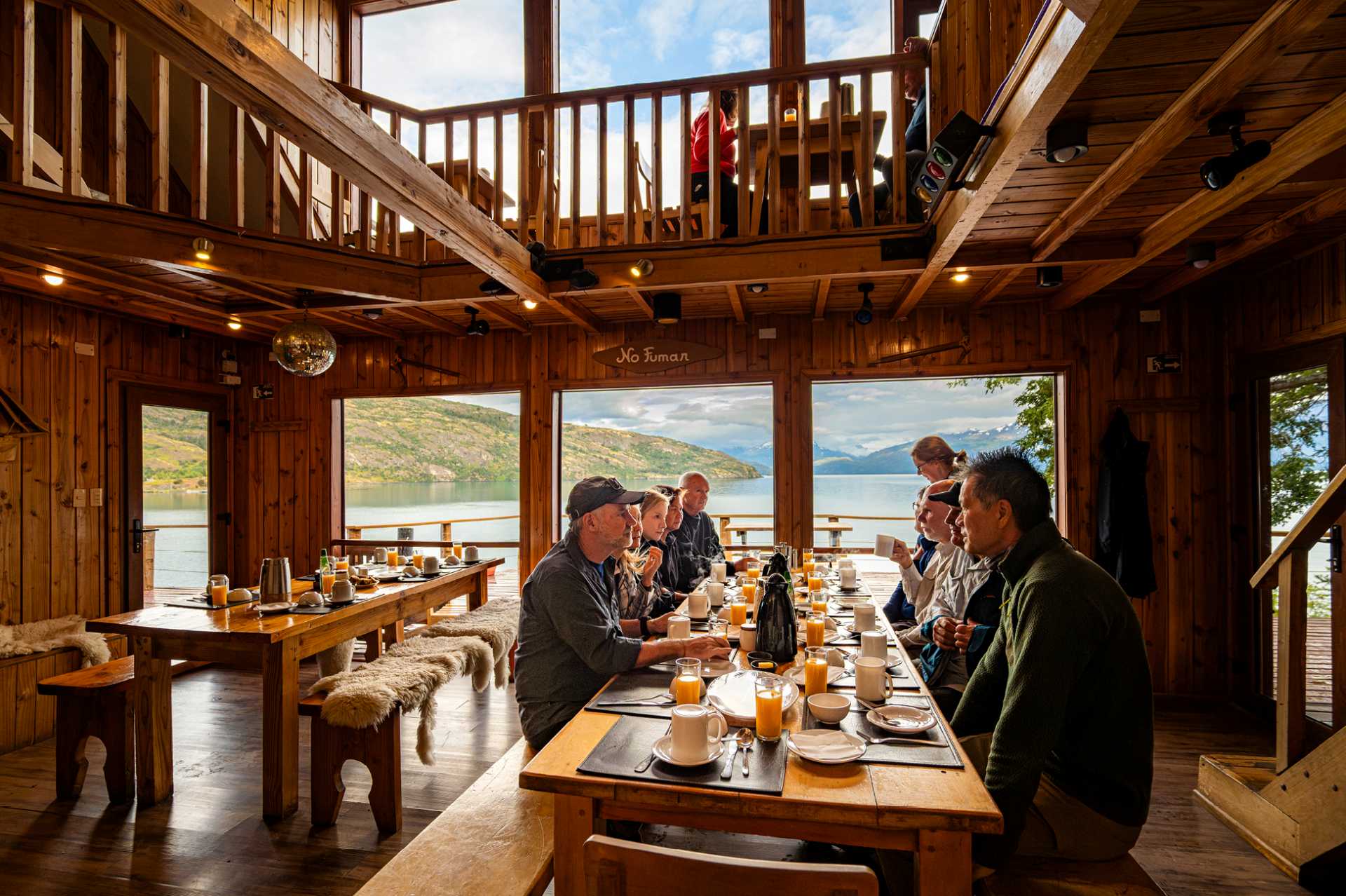
The itinerary crosses remote terrain, involves horse-backed luggage transfers and includes nights under canvas in Torres del Paine. None of that means you're roughing it.
Terra Luna Lodge sets the tone early - lake views, mountain backdrop, a spa and food that stays in the memory. In Torres del Paine the group stays in elevated platform tents at well-run refugios, with hot meals, local wine and craft beer at the end of each day on the trail. Main luggage is transferred ahead throughout. Your daypack carries your lunch and your layers.
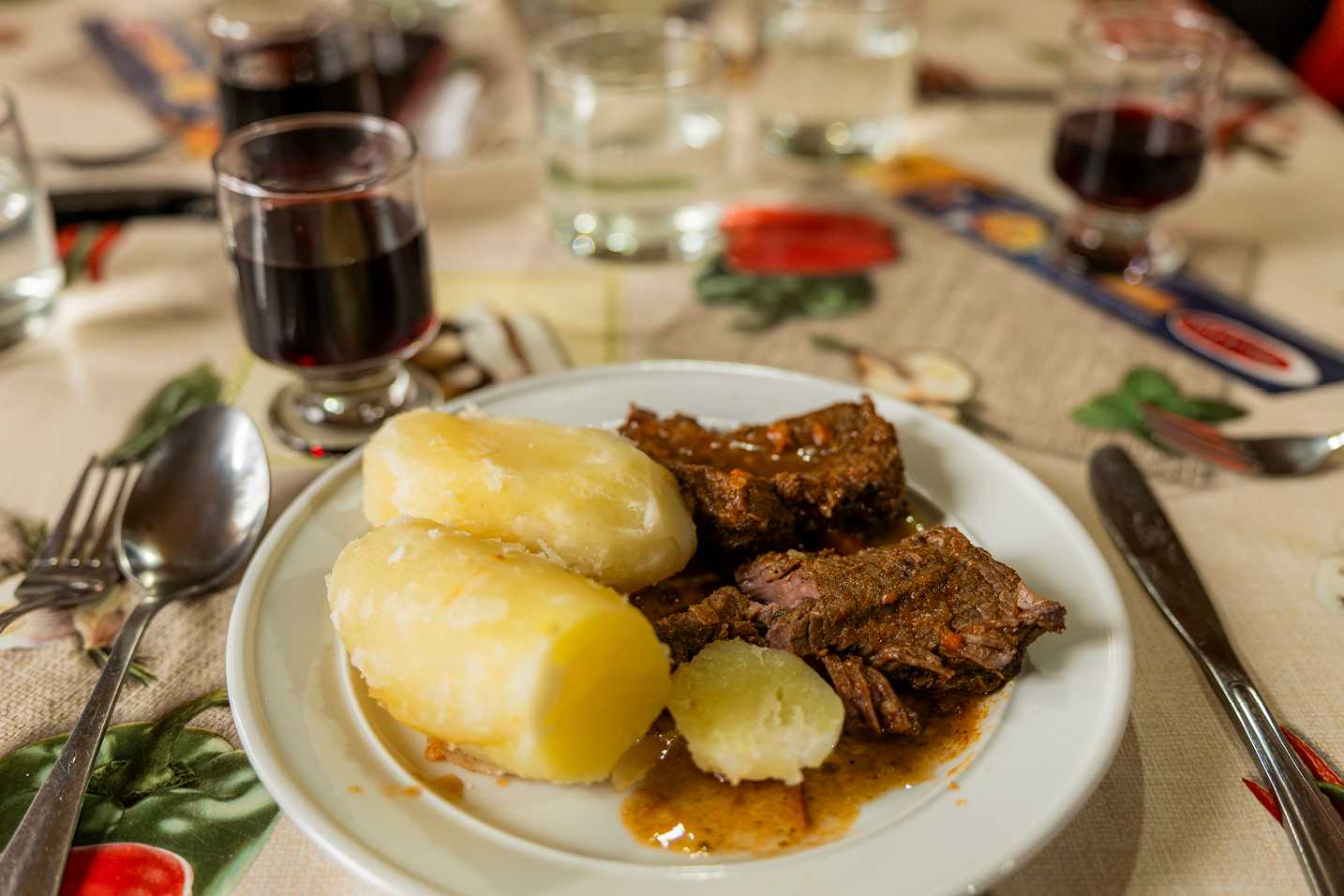
The one genuine exception is the estancia at Candelario Mancilla, a working farm near the Chilean-Argentinian border where a local family has lived for generations. Basic facilities, no hot water - and according to Lachlan, the best meal of the entire trip.
"Slow-cooked beef and potatoes. It was just amazing. Really saying something when you've tasted Argentinian beef."
Two Days Under Fitzroy Is Not Enough
After crossing into Argentina the group reaches El Chalten, a small trekking town at the base of the Fitzroy Massif. Two full days of hiking are based here, with options to push as far or as easy as you like.
On the first morning Lachlan was up before the group, at a viewpoint above town watching the sunrise hit the mountain. The Fitzroy Massif at first light, he said, is more or less the perspective of the Patagonia clothing brand logo. He had three cameras running. He hadn't started trekking yet.
The biggest day from El Chalten covered close to 30 kilometres and nearly 40,000 steps - through orange-tipped beech forest, past turquoise glacier lakes and up to a high viewpoint with two hidden lakes that aren't visible from below. Some in the group took a shorter loop and still came back with outstanding views. The flexibility is built in.
Torres del Paine Is the Finale It Should Be
The last section of the traverse is the W-Trek through Torres del Paine National Park - four to five days of trekking that takes in Lago Grey and the Grey Glacier, the French Valley, and the ascent to the base of the iconic granite towers of Paine.
The group is in the park in peak season, and the main viewpoints do attract crowds. The local guides know this. An early start on the final morning meant arriving at the towers with only a handful of other people. Walking back down they passed hundreds heading up.
"We were very glad our local guides knew to get us up early that morning. It was totally worth it."
The W-Trek section uses permanent refugio camps with hot meals included. No tent setup, no carrying sleeping bags. Just a daypack and the trail ahead.
What the Trip Actually Requires
The Great Patagonian Traverse is graded Moderate. The longest days involve up to eight hours of walking, but the pace is steady and the long Southern Hemisphere summer days mean there's no need to rush. No altitude acclimatisation is required - the route rarely goes above 1,000 metres.
Best time to travel is December through February. Fly into Balmaceda (BBA) and out of Punta Arenas (PUQ). Groups are small, guided by an expert bilingual leader throughout, with local specialist guides joining for key sections.
View Great Patagonian Traverse trip details and available dates.